For decades, the phrase “plant-based cheese” conjured a specific image. It usually meant a shiny, plastic-wrapped block that tasted like chemicals and melted into a rubbery layer. Consequently, these grocery aisle alternatives were a massive disappointment for many consumers trying to step away from dairy.
However, the problem wasn’t the concept itself. Instead, the issue was the manufacturing process. Mass-market brands rushed to create cheap imitations using industrial chemistry. In doing so, they completely bypassed the ancient, time-tested traditions of true cheesemaking.
When you step into the world of authentic, small-batch artisan vegan cheese, you leave the laboratory behind. You enter a realm of pure culinary science. True premium artisan vegan cheese isn’t an engineered substitute. Rather, it is a live, cultured delicacy crafted with the exact same old-world mechanics used by traditional dairy mongers for centuries.
Therefore, to understand why gourmet artisan vegan cheese commands a premium price point, we must look past the packaging. Let’s dive deep into the fascinating science of the craft.
The Foundation: Why Premium Nut Bases Outperform Factory Starches
To understand the vast difference between mass-market options and a true artisan vegan cheese, you must look closely at the ingredient deck. Factory-made blocks are built on a foundation of convenience and cheap fillers. For instance, their primary ingredients are typically water, heavily refined oils, and modified food starches. Because this mixture has zero natural flavor, factories inject synthetic chemical flavorings, massive amounts of sodium, and artificial food dyes to fake the appearance of dairy.
In contrast, true artisan cheesemaking relies entirely on the nutritional and structural integrity of premium whole foods. The foundation consists of nutrient-dense raw ingredients:
- Organic Raw Cashews: Prized for their high content of natural oleic fats and starch, which blend down into an incredibly smooth, milky emulsion.
- Creamy Macadamia Nuts: Utilized to add a rich, buttery density and an authentic mouthfeel that mimics high-fat dairy.
- Organic Almond Milks: Perfect for creating light, clean, and distinct regional profiles.
Furthermore, when these whole nuts are soaked and ground, you aren’t just getting isolated fats. You are getting intact plant proteins, beneficial fibers, vitamins, and minerals. This whole-food base provides a natural, velvety mouthfeel and structural substance that refined oils and processed binders simply cannot replicate.
The Biology of Flavor: Inoculation and Cultured Artisan Vegan Cheese
The true magic—and the sharpest scientific contrast—lies in how the cheese gets its flavor. Traditional dairy cheese gets its complex, sharp bite because it is alive. Authentic artisan vegan cheese makers honor this exact biological reality.
Once the premium nut base is meticulously blended into a rich cream, artisans inoculate the mixture with live active cultures, probiotics, and vegan acidophilus strains. This introduces beneficial bacteria to the blend, starting a natural fermentation process over hours and days.
During fermentation, a beautiful chain reaction occurs:
- Breaking Down the Base: The living cultures consume the natural sugars and carbohydrates present in the raw nuts.
- Creating Natural Acidity: As the bacteria feed, they produce lactic acid, which naturally drops the pH of the mixture.
- Developing the Complex Profile: This acidity creates a deep, natural tang, a velvety tightening of the proteins, and that authentic, unmistakable cheese “funk.”
Meanwhile, mass-produced factory cheese completely skips this biological step because time is money in a high-speed production line. They cannot afford to let a product sit and ferment naturally. Instead, they drop artificial souring agents and chemical additives straight into the mixing vat to instantly fake a savory profile. Ultimately, it is the difference between a naturally brewed, deeply layered espresso and a cup of synthetic, coffee-flavored syrup.
The Microclimate: How the Aging Process Refines Artisan Vegan Cheese
Time is the ultimate luxury in gourmet food preparation, and it is the primary reason traditional artisan vegan cheese is treated as a fine delicacy. Once fermentation is complete, the cheese is shaped into wheels and transferred into specialized, temperature- and humidity-controlled aging rooms.
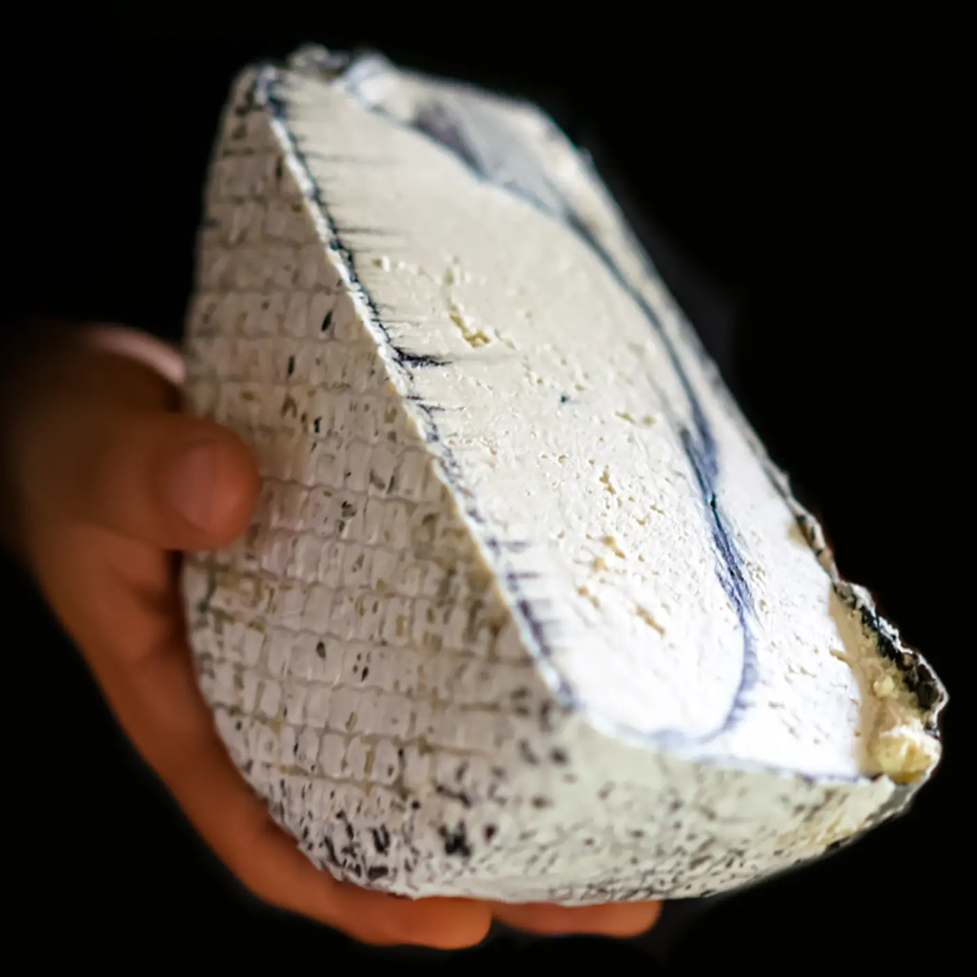
In these precisely regulated microclimates, the science of maturation takes over. Over weeks or months, the moisture slowly evaporates from the wheels, concentrating the natural fats and proteins. This patience allows the cheese to develop a firm texture and complex, deeply layered flavors that evolve on your palate.
It is during this quiet aging process that traditional surface treatments are applied by hand:
- Bloomy Rinds: Introducing specific, non-dairy strains like Penicillium camemberti to grow a stunning, velvety white rind on a plant-based brie.
- Vegetable Ash: Coating wheels in protective layers of activated charcoal or vegetable ash to balance acidity and cultivate historic regional styles.
As a result, every single wheel in an artisan aging room requires daily human interaction. Artisans must turn the cheeses, check the humidity levels, and monitor the rind development. On the other hand, mass-produced alternatives go from a liquid vat into a plastic wrapper in a matter of minutes. There is no aging process, no character development, and zero human touch.
Shifting the Mindset: From Processed Substitute to Fine Delicacy
When you purchase a mass-market alternative at the supermarket, you are paying for industrial chemistry and convenience. However, when you invest in small-batch artisan vegan cheese, you are paying for rigorous culinary science, historical tradition, and pure raw ingredient integrity.
Understanding the intense mechanics of soaking, living fermentation, and meticulous aging changes how we view plant-based food. It transforms a simple block from a sterile dairy substitute into a beautifully crafted, living food art form.
When analyzing ingredient labels for dietary restrictions, choosing a clean-label artisan vegan cheese ensures you bypass industrial fillers entirely. The next time you curate a charcuterie board or elevate a home-cooked meal, look past the factory formulas. Treat your palate, your gut microbiome, and your guests to the incredible depth that only true human craft and biological science can deliver.